Heat treatment is a crucial process in the production of steel products. It significantly enhances the material's properties, such as strength, hardness, and ductility. According to a report by the Steel Research Institute, properly heat-treated steel can exhibit up to 50% greater tensile strength compared to untreated variants. The question arises: "Why is heat treatment used for steel products?" The answer lies in its ability to alter the microstructure of steel.
Understanding heat treatment requires an exploration of its various methods, including annealing, quenching, and tempering. Each method serves a distinct purpose and offers specific benefits. For instance, quenching can increase hardness, while tempering reduces brittleness. However, improper heat treatment can lead to unexpected results, such as warping or cracking. Thus, experience and precision are vital in this process.
The heat treatment landscape is continually evolving. Innovations in technology, like controlled atmosphere furnaces, are improving the effectiveness of heat treatment. This ongoing progress highlights the importance of research and development in maintaining steel's competitiveness in various industries. The link between heat treatment and performance underscores the necessity for manufacturers to understand its significance for quality control.
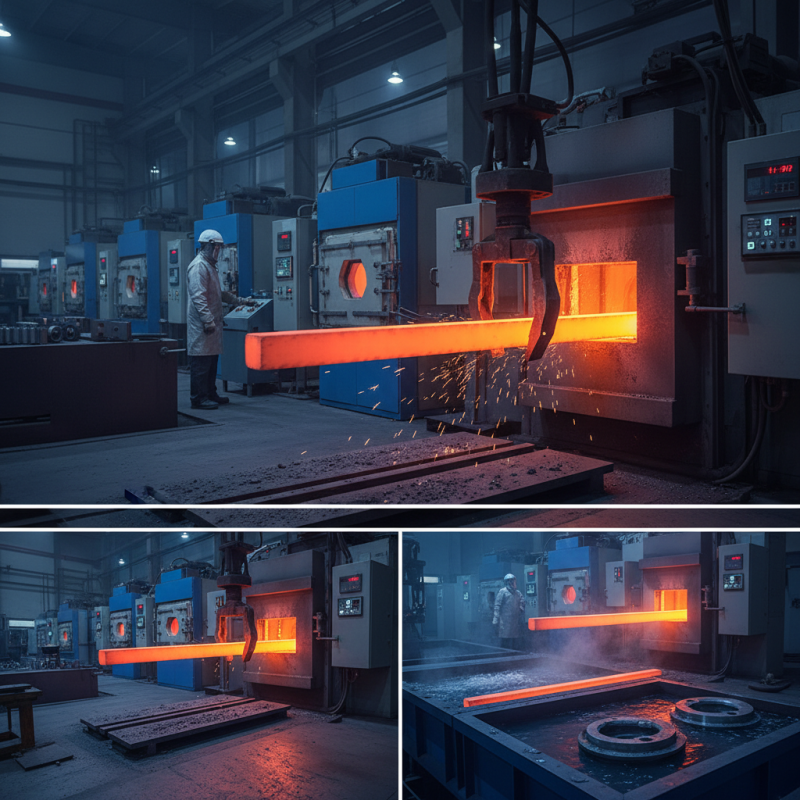
Importance of Heat Treatment in Enhancing Steel's Mechanical Properties
Heat treatment plays a crucial role in enhancing the mechanical properties of steel. This process involves heating the steel to specific temperatures and then cooling it in a controlled manner. According to industry reports, heat-treated steel can exhibit increased hardness, strength, and toughness, which are essential for various applications. For instance, normalized steel often has a yield strength that can exceed 400 MPa, significantly improving its performance in structural applications.
The impact of heat treatment is particularly evident when considering fatigue resistance. Steel products that undergo processes like quenching and tempering reveal a noticeable improvement in their fatigue strength. Data shows that properly treated steel can withstand cyclic loads better than untreated counterparts, making it vital in industries such as automotive and aerospace. However, it's essential to recognize that the effectiveness of heat treatment largely depends on the specific steel grade and the treatment parameters used. This complexity can lead to inconsistencies in results, prompting manufacturers to continually refine their methods.
Moreover, while heat treatment can enhance steel properties, it also introduces challenges. Overheating or improper cooling rates can lead to brittleness, affecting long-term durability. Additionally, not all steel types respond positively to every heat treatment process, which necessitates careful selection and testing. Regularly updating knowledge about heat treatment processes is essential for engineers to avoid potential pitfalls. Despite these challenges, the benefits of heat treatment in steel manufacturing cannot be overlooked.
Importance of Heat Treatment in Enhancing Steel's Mechanical Properties
This chart illustrates how different heat treatment processes enhance the tensile strength of steel products. Before treatment, steel has a tensile strength of 400 MPa. After undergoing annealing, quenching, and tempering, the tensile strength improves significantly, demonstrating the effectiveness of heat treatment in steel production.
Common Types of Heat Treatment Processes and Their Applications
Heat treatment is a vital process in enhancing the performance of steel products. There are several common types of heat treatment processes, each serving specific purposes. Annealing is one of the most widely used methods. It involves heating steel and then slowly cooling it. This process reduces hardness, enhances ductility, and improves machinability. It's often applied to improve the steel's formability.
Quenching is another essential method. This process involves heating the steel to a high temperature and then rapidly cooling it, usually in water or oil. Quenching increases hardness and strength but can introduce internal stresses. Tempering is often done afterward to relieve these stresses and improve toughness.
Other processes, such as normalizing and case hardening, are also significant. Normalizing improves microstructure, resulting in better mechanical properties. Case hardening, on the other hand, hardens the surface while maintaining the core's toughness. Each of these heat treatment methods has its applications, from automotive to aerospace industries, highlighting their crucial roles in steel fabrication.
Impact of Heat Treatment on Steel's Hardness and Ductility Levels
Heat treatment plays a pivotal role in determining the mechanical properties of steel. This process significantly influences both hardness and ductility levels. Hardness measures a material's resistance to deformation, while ductility refers to its ability to deform without breaking. Achieving a balance between these properties is crucial for steel products used in various applications.
During heat treatment, the steel is subjected to specific heating and cooling cycles. These cycles alter the microstructure of the metal, enhancing its strength. For instance, quenching can increase hardness but may reduce ductility. It's essential to tailor these processes to suit the intended use of the steel.
Tips for optimizing heat treatment include experimenting with different cooling rates. Slowly cooling may improve ductility, whereas rapid cooling can enhance hardness. It’s also valuable to monitor the tempering process. Proper tempering can relieve stresses induced during quenching, improving overall performance.
Consider the application. Higher hardness is not always best. If flexibility is needed, prioritize ductility. Each application requires unique properties, and achieving the right balance may take time and testing. This ongoing assessment can help refine the heat treatment process for better results.
Statistical Data on Failure Rates of Untreated vs. Heat Treated Steel
Heat treatment is crucial for enhancing the properties of steel products. Statistical data shows that untreated steel has significantly higher failure rates compared to heat-treated steel. In various studies, untreated steel components often fail under stress, leading to costly replacements and safety hazards. In contrast, heat-treated steel demonstrates improved strength, ductility, and fatigue resistance.
Consider this: one study indicated that untreated steel parts failed up to 40% more often than their treated counterparts in similar applications. This striking difference highlights the benefits of heat treatment. By altering the microstructure of steel, manufacturers can ensure longer-lasting performance and improved reliability.
Tips for improving your steel products: Ensure you collaborate with experts in metallurgy to select the right heat treatment process. Regularly review failure rates in your applications to identify patterns and trends. Testing different heat treatment methods may yield surprising results, enhancing your product's overall quality. It's essential to evaluate each technique's effectiveness and reassess if necessary.
Statistical Data on Failure Rates of Untreated vs. Heat Treated Steel
| Steel Type |
Failure Rate (Untreated) |
Failure Rate (Heat Treated) |
Improvement (%) |
| Carbon Steel |
15% |
5% |
66.67% |
| Alloy Steel |
20% |
7% |
65% |
| Stainless Steel |
10% |
3% |
70% |
| Tool Steel |
12% |
4% |
66.67% |
| High Carbon Steel |
18% |
6% |
66.67% |
Economical Benefits of Implementing Heat Treatment in Steel Manufacturing
Heat treatment plays a crucial role in the steel manufacturing process. It enhances the mechanical properties of steel. According to industry reports, heat-treated steel displays a 30% increase in tensile strength compared to untreated steel. This improvement leads to more durable end products. The increased durability results in lower maintenance costs for manufacturers.
Implementing heat treatment can yield significant economic benefits. A report by the Steel Manufacturers Association indicated that manufacturers who adopted heat treatment saw a reduction in production costs by approximately 15%. The initial investment in heat treatment technology can be offset by these long-term savings. Additionally, heat-treated steel components typically have a longer life span, which results in less frequent replacements.
Not all manufacturers use heat treatment effectively. Some overlook the need for proper temperature regulation and timing. These oversights can lead to variations in product quality, which may ultimately increase costs. It is essential for manufacturers to continually assess their heat treatment processes to ensure maximum efficiency and product reliability. Emphasizing quality through heat treatment can lead to improved customer satisfaction and better market positioning.
FAQS
: Heat treatment enhances steel performance through specific heating and cooling processes.
Annealing involves heating steel and slowly cooling it. This reduces hardness and improves ductility.
Quenching heats steel then rapidly cools it in water or oil. This increases hardness and strength but may cause internal stresses.
Tempering relieves internal stresses from quenching, improving the toughness of the steel.
Normalizing improves the microstructure of steel, leading to better mechanical properties and performance.
Case hardening hardens the surface of steel while keeping the core tough, enhancing wear resistance.
Untreated steel fails up to 40% more often than heat-treated steel under stress, indicating its poor reliability.
Experts help select the most suitable heat treatment process, potentially improving product quality significantly.
Regularly reviewing failure rates can reveal patterns, prompting necessary improvements in heat treatment approaches.
Testing different methods can lead to surprising improvements; reassess each technique's effectiveness as needed.
Conclusion
Heat treatment is a crucial process in steel manufacturing that significantly enhances the mechanical properties of steel products. The process is employed to improve hardness, ductility, and overall performance of steel, ensuring reliability in various applications. Common types of heat treatment, such as annealing, quenching, and tempering, are utilized depending on the desired characteristics. Understanding "why is heat treatment used for steel products" is essential, as it directly influences the material's strength and resistance to failure.
Statistical data highlights the stark contrast in failure rates between untreated and heat-treated steel, demonstrating the enhanced durability offered through treatment processes. Moreover, implementing heat treatment can lead to economical benefits by reducing material waste and increasing the lifespan of steel components. Overall, heat treatment plays a vital role in ensuring that steel products meet the rigorous demands of modern industries.

 Campfire Steel