China’s Top 10 stainless steel products reflect a wider industrial shift. Why are stainless steel products so popular? The answer combines durability, hygiene, appearance, and long-term value. A stainless steel sink survives years of hot water, detergent, and daily impact. A food-processing surface can be cleaned repeatedly without absorbing moisture or odors. These practical details matter to buyers.
According to the World Stainless Association’s Stainless Steel in Figures 2024, global stainless crude steel production reached approximately 58.4 million tonnes in 2023. China remained the largest producing region, supporting extensive manufacturing in cookware, construction components, medical equipment, automotive parts, and household goods. The International Stainless Steel Forum also highlights stainless steel’s strong corrosion resistance and high recycling potential. These qualities help reduce replacement frequency. They can also lower maintenance costs.
Tim Collins, Secretary General of worldstainless, has described stainless steel as “a permanent material.” That phrase explains its appeal. It does not tell the whole story. Energy use, alloy selection, surface treatment, and transport still affect environmental performance. Popular does not mean perfect. Some low-grade products may stain, deform, or disappoint when specifications are unclear. This is where professional testing and transparent standards become important. The following overview examines China’s leading stainless steel products through material quality, application experience, manufacturing capability, and market evidence. It also asks a harder question: does a polished surface always represent better value? Sometimes, no.
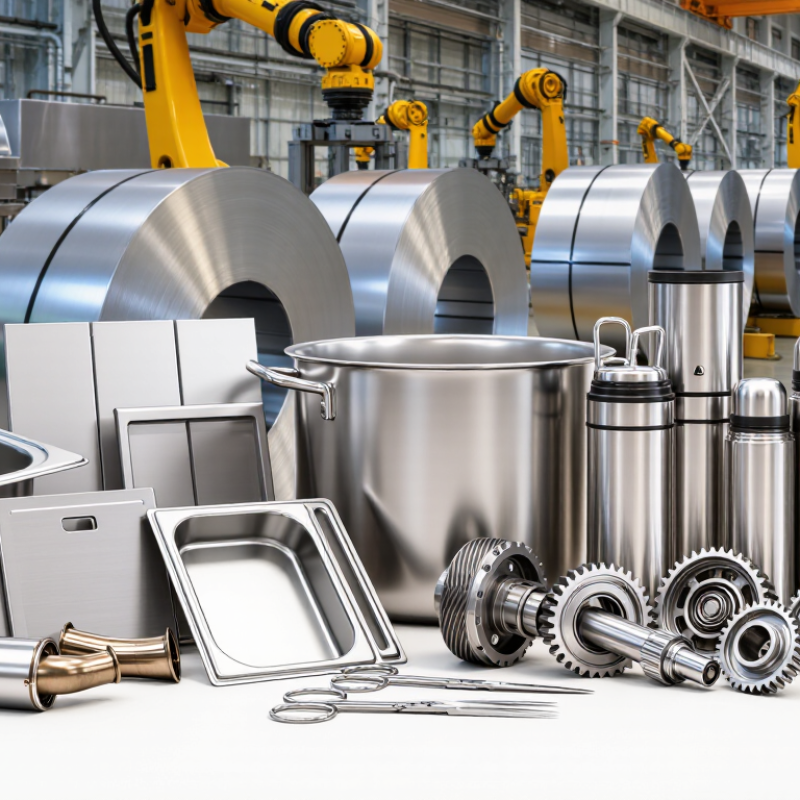
China’s top 10 stainless steel products are defined by more than production volume. They reflect measurable performance, stable supply, and practical use across construction, food equipment, transport, and energy projects. The International Stainless Steel Forum reported approximately 58.4 million tonnes of global stainless steel production in 2023. China contributed about 37 million tonnes, showing its industrial scale and processing depth.
Scale matters, but it is not enough. A leading product should offer consistent thickness, controlled surface finish, corrosion resistance, and traceable material certificates.
Common evaluation points include tensile strength, chemical composition, welding behavior, and dimensional tolerance.
In real projects, buyers also examine cutting accuracy and packaging. Wet containers, scratched sheets, and unclear heat numbers can create expensive delays.
Small details decide trust.
The strongest products usually combine coils, sheets, pipes, bars, and precision components with flexible fabrication. Custom slitting, polishing, laser cutting, and formed sections improve installation efficiency. Industry reports from the World Stainless Steel Association also show stainless steel demand remains closely linked to infrastructure, manufacturing, and durable consumer goods. However, low prices can hide inconsistent quality. Some rankings focus too heavily on export volume. That approach needs reconsideration. A more reliable top-ten list should balance output, technical compliance, delivery performance, and lifecycle value.
Selecting China’s top ten stainless steel products requires more than checking export volume. We examine demand, performance, processing difficulty, and verified market evidence.
The International Stainless Steel Forum reported about 58.4 million tonnes of global crude stainless steel production in 2023. This figure shows strong industrial demand, but it does not prove product quality.
Our selection gives weight to corrosion resistance, grade consistency, dimensional accuracy, and application value. Products used in food processing, construction, energy, transport, and medical facilities receive closer review.
We also compare surface finish, weldability, delivery stability, and documented compliance with relevant standards. Stainless steel is highly recyclable, according to industry sustainability reports, so lifecycle value matters too.
However, recycled content differs by region and furnace type. It should not be assumed.
Tips: Ask for mill certificates, test reports, and traceable batch numbers. Check the actual grade, not only the product name. A polished surface can hide poor chemistry. That matters.
We also study purchasing data, trade statistics, and feedback from fabricators. The World Steel Association and regional customs databases help identify sustained demand.
Yet rankings remain imperfect. Export volume can favor large suppliers, while small precision products may offer greater technical value.
Our method therefore combines numbers with practical inspection, including edge quality, flatness, packaging, and visible surface defects. Field experience suggests that one neglected detail can change the buying decision.
China’s stainless steel sector serves construction, food processing, transport, energy, and household manufacturing. According to the International Stainless Steel Forum’s 2023 statistics, global crude stainless steel production reached about 58.4 million tonnes. China produced approximately 36.7 million tonnes, showing its strong manufacturing depth. The leading categories include stainless steel coils, sheets, plates, welded pipes, seamless pipes, bars, wire, profiles, precision strips, and fabricated kitchenware. These products cover both heavy engineering and daily use.
Coils, Sheets, and Plates Coils and sheets remain popular because they offer consistent thickness, corrosion resistance, and easy forming. Plates support tanks, bridges, pressure equipment, and industrial floors.
Pipes, Bars, Wire, and Profiles Pipes serve water systems, chemical processing, and architectural structures. Bars, wire, and profiles support machining, fasteners, railings, and equipment frames.
Precision strips are important in electronics and medical components, where surface quality matters. Kitchenware and fabricated sanitary products add visible value through clean surfaces and easy maintenance.
Not every product is equally advanced.
The International Stainless Steel Forum notes that nickel prices, energy costs, and regional demand can strongly affect stainless steel markets. Buyers still need to check grade, testing records, surface finish, dimensional tolerance, and welding performance. Category rankings also vary by report methodology. That detail is easy to overlook.
In practice, the best product is not always the cheapest one; service life, inspection quality, and processing losses can change the real cost.
Why are these stainless steel products so popular? Their appeal starts with practical daily performance. In kitchens, food-service counters, hospitals, and factories, stainless steel resists moisture, stains, and frequent cleaning. A sink can face hot water, detergent, and dropped utensils without losing its basic function. Shelves, pipes, fasteners, tanks, and cookware also fit different working environments. This wide usefulness makes purchasing decisions easier.
Experienced fabricators often recommend grades according to exposure, temperature, and maintenance needs. Austenitic grades usually offer strong corrosion resistance and easy forming, while other grades can provide greater hardness or heat performance. The right finish matters, too. A smooth surface collects less residue and is easier to inspect. In a busy kitchen, that may mean fewer hidden crumbs around a welded corner. Reliable suppliers should provide material certificates, dimensions, weld quality checks, and clear care instructions. These details support trust beyond a bright showroom surface.
Stainless steel is not perfect. It can scratch, show fingerprints, and develop tea staining near salt air. Poor welding or unsuitable cleaning chemicals may cause early damage. I have seen attractive panels fail because the design ignored drainage and airflow. That lesson deserves attention. Buyers should compare lifecycle cost, not only the initial price. A slightly heavier shelf, properly finished and easy to repair, may serve longer than a cheaper alternative. Popularity comes from this balance: clean appearance, dependable strength, and practical maintenance.
A practical comparison of widely used stainless steel product categories, typical grades, technical characteristics, and major demand drivers
| No. | Stainless Steel Product | Typical Grades | Common Thickness or Size | Typical Chemical Characteristics | Key Performance | Common Applications | Why It Is Popular |
|---|---|---|---|---|---|---|---|
| 1 | Stainless Steel Sheet | 304 / 316L / 430 | 0.3–6.0 mm thickness; standard widths commonly include 1,000–2,000 mm | 304 typically contains about 18–20% chromium and 8–10.5% nickel; 316L additionally contains approximately 2–3% molybdenum | Good corrosion resistance, smooth surface, easy forming, cutting, and welding | Kitchen equipment, architectural panels, food-processing machinery, cabinets, and household appliances | Available in many finishes and thicknesses, easy to process, and suitable for both industrial and decorative work |
| 2 | Stainless Steel Coil | 304 / 316L / 409 / 430 | Approximately 0.2–6.0 mm thickness; supplied in slit coils or master coils | Grade chemistry varies; austenitic grades contain nickel, while ferritic grades such as 430 generally contain little or no nickel | Continuous length, consistent thickness, efficient production, and good surface quality | Automotive components, metal stamping, welded tubing, roofing, appliance parts, and construction products | Reduces cutting waste and supports high-speed roll forming, stamping, and automated manufacturing |
| 3 | Stainless Steel Plate | 304L / 316L / 321 / 2205 | Usually above 6 mm thickness; heavy plates may exceed 50 mm | 316L contains molybdenum for improved chloride resistance; duplex 2205 generally contains about 21–23% chromium and 2.5–3.5% molybdenum | High structural strength, impact resistance, corrosion resistance, and long service life | Pressure vessels, chemical tanks, marine structures, bridges, industrial platforms, and heat exchangers | Combines structural reliability with corrosion protection in demanding environments |
| 4 | Stainless Steel Pipe | 304 / 304L / 316L / 321 | Common outside diameters range from 6 mm to more than 1,000 mm | Low-carbon grades such as 304L and 316L help reduce sensitization after welding; 321 is stabilized with titanium | Leak-resistant flow path, hygienic surface, high temperature capability, and strong corrosion resistance | Water systems, chemical processing, oil and gas, food production, pharmaceuticals, and building services | Reliable for transporting liquids and gases while requiring relatively little maintenance |
| 5 | Stainless Steel Tube | 304 / 316L / 409 / 439 | Round, square, rectangular, and oval sections; wall thickness commonly 0.5–5.0 mm | Austenitic grades provide strong corrosion resistance; ferritic grades provide heat resistance with lower nickel content | Lightweight, formable, weldable, and available in precision dimensions | Heat exchangers, exhaust systems, furniture, handrails, heat-transfer equipment, and structural frames | Offers a good balance of appearance, strength, weight, and manufacturing flexibility |
| 6 | Stainless Steel Bar | 303 / 304 / 316 / 17-4 PH | Round, square, hexagonal, and flat bars; typical diameters range from 3 mm to over 300 mm | 303 is optimized for machinability; 17-4 PH is a precipitation-hardening grade with high strength | Good machinability, high dimensional stability, strength, and corrosion resistance | Shafts, valves, fasteners, machine parts, medical equipment, and precision components | Suitable for machining and load-bearing parts, with grade options for different strength requirements |
| 7 | Stainless Steel Wire and Mesh | 304 / 316 / 316L / 430 | Wire diameters commonly range from 0.05 mm to 12 mm; mesh openings vary by specification | 316 and 316L provide better resistance to chloride-containing environments than standard 304 | High tensile strength, flexibility, corrosion resistance, and stable performance at elevated temperatures | Filters, screens, conveyor belts, springs, safety barriers, fencing, and reinforcement products | Can be woven, welded, braided, or formed into complex shapes for specialized applications |
| 8 | Stainless Steel Angles and Channels | 304 / 316 / 316L / 430 | Common leg sizes range from 20–200 mm; thicknesses commonly range from 2–20 mm | 304 is widely used for general corrosion resistance, while 316 is preferred in marine and chemical environments | High stiffness, corrosion resistance, weldability, and good load distribution | Structural frames, supports, platforms, shipbuilding, architectural trim, and equipment bases | Provides corrosion-resistant structural support without the need for heavy protective coatings |
| 9 | Stainless Steel Sanitary Fittings | 304 / 316L | Common nominal sizes range from DN10 to DN200; sanitary finishes may reach Ra ≤ 0.8 μm or lower | 316L is commonly selected for pharmaceutical, dairy, and high-purity applications because of its molybdenum content and low carbon level | Cleanable surface, hygienic design, corrosion resistance, and low risk of product contamination | Dairy processing, breweries, food plants, cosmetics, biotechnology, and pharmaceutical systems | Supports strict hygiene requirements and can be cleaned using cleaning-in-place procedures |
| 10 | Stainless Steel Fasteners | 304 / 316 / 410 / 17-4 PH | Metric and imperial sizes from miniature screws to large structural bolts | 304 and 316 are common corrosion-resistant austenitic grades; 410 and 17-4 PH offer higher hardness or strength | Corrosion resistance, reliable joint performance, low maintenance, and long service life | Construction, machinery, marine equipment, renewable energy systems, vehicles, and outdoor structures | Maintains fastening performance in humid, outdoor, and chemically exposed environments |
Technical note: The specifications shown are typical industry ranges. Exact chemical composition, dimensions, mechanical properties, surface finish, and corrosion performance depend on the applicable standard, production method, and end-use environment.
China Top 10 Stainless Steel Products Why So Popular?
Key Industries and Applications for China’s Stainless Steel Products
China’s stainless steel products serve construction, food processing, transport, energy, and medical manufacturing. Construction remains a major application. Sheets, pipes, bars, and structural components handle moisture, daily wear, and changing temperatures. Fabricators often select stainless steel for its strength, clean appearance, and manageable maintenance. That sounds simple. Yet material selection still requires careful judgment.
Food factories use stainless steel tanks, counters, conveyors, and storage vessels. Smooth surfaces support regular cleaning and reduce places where residue can collect. Hospitals and laboratories also use stainless steel cabinets, trays, sinks, and equipment frames. Chemical plants need products that resist specific acids, salts, or high temperatures. No grade fits every condition. A wrong choice can create early corrosion, expensive repairs, or unsafe downtime.
Energy projects rely on stainless steel tubing, valves, heat exchangers, and pressure-related components. Transport equipment uses it for vehicle interiors, exhaust systems, rail parts, and public facilities. Chinese manufacturers commonly provide cut-to-size plates, welded pipes, precision strips, and custom-fabricated assemblies. In real projects, reliable performance depends on more than appearance. Buyers should review chemical composition, mechanical data, surface finish, dimensional tolerance, welding quality, and inspection records. Some specifications may look impressive but remain unclear without independent testing. Engineers should also consider local standards, service conditions, installation methods, and long-term maintenance before approving a product.
Typical chromium content of widely used stainless steel grades and their key industrial applications.
Why these products are popular: Chromium levels of at least about 10.5% enable stainless steel to form a protective passive layer. Higher alloying, especially nickel, molybdenum and nitrogen, improves corrosion resistance, strength and service life.
Applications include construction, food processing, kitchen equipment, chemical processing, transportation, energy, medical equipment and automotive exhaust systems. Values represent typical midpoint chromium content from commonly specified grade ranges; exact chemistry varies by standard and product specification.
Selection considers demand, corrosion resistance, grade consistency, dimensions, processing difficulty, and application value. Numbers alone are insufficient.
Construction, food processing, transport, energy, hospitals, laboratories, and factories use them widely. Applications vary greatly.
It resists moisture, stains, frequent cleaning, and daily impacts from utensils. Smooth surfaces also leave fewer places for residue.
No. Grade choice depends on exposure, temperature, chemicals, forming needs, and maintenance conditions. The wrong grade may corrode early.
Request mill certificates, test reports, batch numbers, chemical data, mechanical results, and dimensional records. Traceability matters.
No. A bright surface can hide poor chemistry, weak welding, or inaccurate dimensions. Inspect the edges, flatness, and weld areas.
Scratches, fingerprints, tea staining, poor welds, and chemical damage can occur. Salt air may accelerate surface staining. Stainless steel is not maintenance-free.
Stainless steel is highly recyclable, supporting long-term lifecycle value. However, recycled content differs by region and furnace type. Do not assume the percentage.
A heavier, well-finished shelf may last longer and remain easier to repair. A cheaper product can create repeated maintenance costs. The cheapest option is not always economical.
No ranking is flawless. Export data may favor large suppliers, while small precision products can offer higher technical value. One neglected detail can change the result.
China’s top 10 stainless steel products represent a broad range of essential categories, including sheets, coils, pipes, tubes, bars, wires, plates, fittings, kitchenware, and customized components. These products are selected according to material quality, corrosion resistance, strength, surface finish, production consistency, processing flexibility, and suitability for different industrial requirements. Together, they reflect the development of China’s stainless steel manufacturing capabilities and its ability to provide standardized and specialized solutions.
Why are stainless steel products so popular? Their durability, hygiene, attractive appearance, recyclability, and resistance to heat, moisture, and corrosion make them valuable across many industries. They are widely used in construction, transportation, food processing, medical equipment, chemical production, energy facilities, household products, and architectural projects. With efficient manufacturing, diverse specifications, and adaptable processing options, China’s stainless steel products can meet the practical needs of both large industrial projects and everyday applications.

Campfire Steel