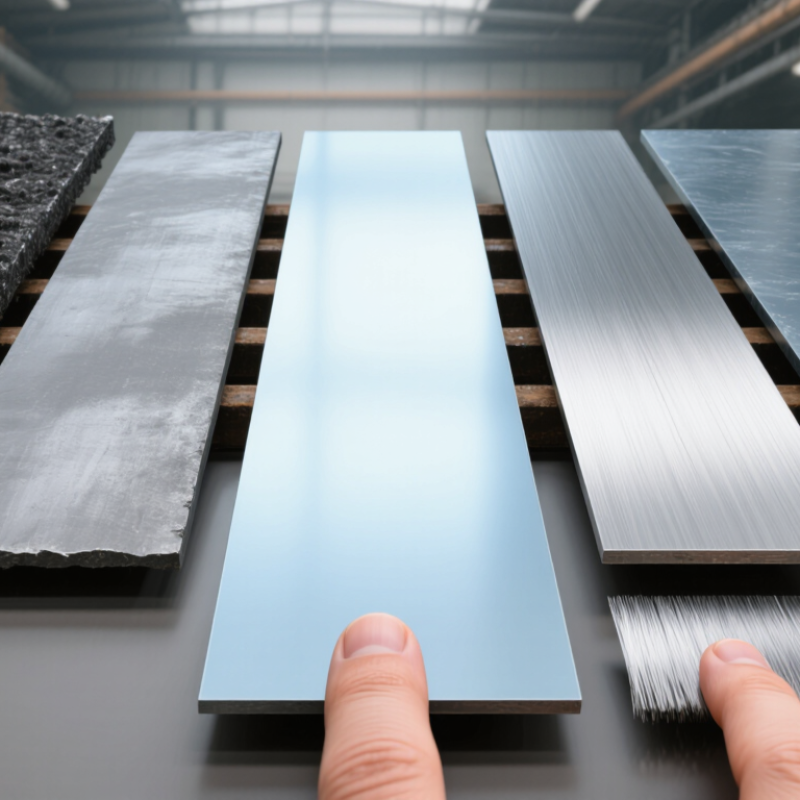
Why do steel products have different finishes? The answer begins at the surface, where manufacturing choices shape appearance, performance, and maintenance. Hot-rolled steel often keeps a dark, textured mill scale. Pickling removes that scale, while cold rolling can create a smoother, more uniform sheet. Galvanizing adds a zinc layer; brushing or polishing changes the visible grain. Each finish leaves a different feel beneath your fingertips.
These differences matter beyond appearance. NACE International’s 2016 IMPACT study estimated that corrosion costs about $2.5 trillion annually, or 3.4% of global GDP. That figure covers corrosion broadly; it does not mean a particular finish can prevent every failure. As corrosion specialist David A. Jones writes, “Corrosion is the deterioration of a material, usually a metal, that results from a reaction with its environment.” A finish can influence that interaction, but service conditions still matter.
There is no universal best finish. ASTM A480/A480M, for example, identifies finish options for flat-rolled stainless steel, helping buyers specify what they need. A brushed panel may suit a visible interior, while a coated surface may better fit a demanding outdoor setting. The right choice depends on exposure, fabrication, cleaning, and budget. Small details count. Even so, finish names alone can mislead; confirm the specification and intended use before comparing products.
How Hot Rolling Leaves Mill Scale on Carbon Steel
Hot-rolled carbon steel often carries a blue-gray, rough surface called mill scale. It forms when hot steel reacts with oxygen during reheating and rolling. The scale contains iron oxides, commonly including wüstite, magnetite, and hematite. Not paint. As the steel passes through the rolls, the brittle oxide layer cracks and can partly flake away. High-pressure water removes much of it, but patches may remain in pits and edges.
Scale thickness and appearance vary with furnace temperature, time at heat, and cooling conditions. A dark, tightly attached layer can look almost smooth; loose flakes feel gritty and may shed during handling. The European Commission Joint Research Centre’s 2013 Best Available Techniques reference document for iron and steel production describes rolling scale as an iron-bearing material that can be recovered. That distinction matters: scale is not simply a cosmetic finish, and it can affect coating preparation and weld quality. I would not assume every dark patch is equally bonded.
The scale forms across a vast industry. World Steel Association’s World Steel in Figures 2025 reports 1,882.6 million tonnes of crude steel production in 2024; this is a steel-production figure, not a mill-scale estimate. For buyers, the practical check is the actual surface condition. Rub a clean cloth over it. If flakes lift easily, specify cleaning before painting or other coating work.
How ASTM A380 Guides Steel Cleaning and Descaling
Steel products can leave the mill with bright, brushed, pickled, or dull surfaces. Their appearance depends on processing, not simply steel grade. For stainless steel, ASTM A380/A380M provides practices for cleaning, descaling, and passivation. It helps fabricators choose suitable treatment steps; it does not prescribe one appearance for every product.
Cleaning removes oil, grease, and shop dirt. Descaling targets heat-treatment oxides and weld scale, often visible as dark or straw-colored patches near a weld. ASTM A380 discusses chemical and mechanical approaches, along with ways to check that treatment worked.
Method selection matters: an abrasive can scratch a polished surface, while an unsuitable chemical process may cause staining or damage. Rinsing thoroughly is essential. Small residues count.
Passivation is not a painted coating. It supports the stainless surface’s ability to form its protective passive layer by removing surface contaminants, especially free iron.
A clean-looking part is not automatically clean enough; appearance alone cannot confirm that iron contamination is gone. Appropriate verification may be needed, depending on the application and specification.
In practice, teams sometimes focus too much on shine. That is an easy mistake. The current standard edition and project requirements should guide the procedure, since alloy, surface condition, and service environment all affect the choice.
How Cold Rolling Produces Sheet Finishes Defined by ASTM A480
Why Do Steel Products Have Different Finishes?
Cold rolling reduces stainless steel sheet thickness between rotating rolls, leaving a smoother, more controlled surface than hot rolling. The finish depends on what happens next. Under ASTM A480, designations describe surface conditions, not just appearance. Small process differences matter.
A 2D finish is dull and relatively matte, while 2B receives a light final pass that creates a smoother, more uniform surface. It is widely used when a practical, clean-looking sheet is needed. Bright annealing can produce a reflective BA finish by heating the steel in a controlled atmosphere. The exact appearance can vary with thickness and processing. That is easy to overlook.
Mechanical polishing creates finishes such as No. 3 and No. 4, which show visible grain patterns. No. 4 often has a fine, directional brush appearance. A finish designation alone does not establish corrosion performance; alloy choice, fabrication, and service conditions also matter. Nor does a polished look guarantee easy maintenance. When specifying sheet, compare the required finish with the applicable ASTM A480 requirements and the supplier’s documented condition. Check a sample under the lighting where the product will be used. Reflection can be surprisingly different there.
How ASTM A653 G90 Coatings Specify 275 g/m² of Zinc
Why Do Steel Products Have Different Finishes?
A bright, smooth sheet and a dull, spangled sheet may both be zinc-coated steel. Their appearance can differ because of surface treatment, cooling conditions, and coating thickness. For specification work, appearance alone is not enough.
ASTM A653/A653M defines G90 by coating mass: 0.90 oz/ft², or about 275 g/m², across both sheet surfaces combined. The standard’s coating-mass table also gives a 0.80 oz/ft² (about 244 g/m²) single-spot minimum. That distinction matters. G90 does not mean 275 g/m² on each face. A coating-weight test checks the zinc present, while a visual inspection cannot confirm the mass. Zinc also offers sacrificial protection, but service life still depends on exposure, cut edges, and handling. One detail is easy to overlook: G90 specifies coating mass, not a guaranteed finish or lifespan.
Tips: Check the purchase specification for G90 and the required test basis. When comparing samples, inspect both faces and edges. A neat-looking surface is useful, but it is not a coating-weight result.
Why Do Steel Products Have Different Finishes?
ASTM A653 G90 specifies a zinc coating mass of approximately 275 g/m² across both sides of the steel sheet.
Coating designations indicate the approximate total zinc mass on both sides, not the amount on each side. Actual distribution between the two surfaces can vary.
How Stainless Steel Codes Distinguish 2B and No. 4 Finishes
A stainless finish code describes the surface, not the steel grade. ASTM A480/A480M defines 2B as a smooth, moderately reflective finish made through cold rolling, heat treatment, pickling, and a final light rolling pass. The Stainless Steel Industry of North America (SSINA) identifies 2B as a widely used mill finish. No. 4, by contrast, is mechanically polished, leaving a fine, directional satin grain. SSINA lists it among common polished finishes.
The difference shows clearly under workshop lights: 2B reflects softly and evenly, while No. 4 shows visible brush lines. No. 4 is often selected for visible panels and equipment surfaces; 2B suits applications where a uniform mill finish is preferred. But the code alone cannot predict every sheet’s appearance. Abrasive choice, production route, and supplier practice affect the result. ASTM A480/A480M does not prescribe one universal roughness value for every No. 4 surface, so avoid treating the finish number as a precise Ra guarantee. A finish also does not, by itself, determine corrosion resistance.
Tips: Request a physical sample and compare it under the lighting used in the finished space. Check the grain direction. Small detail. For measured roughness, specify an Ra requirement separately and confirm the measurement method with the supplier.
Conclusion
Why do steel products have different finishes? Their surfaces reflect the processes and protective treatments used during manufacturing. Hot-rolled carbon steel can retain mill scale, a dark layer formed by heat. Cleaning and descaling guidance such as ASTM A380 helps describe ways to remove surface residues and prepare steel for later processing or use.
Cold rolling creates smoother sheet surfaces, with finish categories described in ASTM A480. For galvanized steel, the G90 designation in ASTM A653 specifies a zinc coating mass of 275 g/m², providing a defined level of surface protection. Stainless steel finishes also communicate appearance and texture: 2B is generally smooth and reflective, while No. 4 has a brushed, directional look. Together, these distinctions help explain how production methods and coatings affect a steel product’s appearance, surface condition, and intended application.

 Campfire Steel